题⽬描述
输⼊两个链表,找出它们的第⼀个公共结点。(注意因为传⼊数据是链表,所以错误测试数据的提示是⽤其他⽅式显示的,保证传⼊数据是正确的)
思路及解答
HashSet包含法
第⼀种做法,直接依赖于 HashSet ,遍历第⼀个链表的时候,将所有的节点,添加到 hashset 中,
遍历第⼆个链表的时候直接判断是否包含即可,属于空间换时间的做法。- public ListNode FindFirstCommonNode(ListNode pHead1, ListNode pHead2) {
- if (pHead1 == null || pHead2 == null) return null;
-
- // 使用HashSet存储第一个链表的所有节点
- HashSet<ListNode> visited = new HashSet<>();
-
- // 遍历第一个链表,将所有节点加入集合
- ListNode current = pHead1;
- while (current != null) {
- visited.add(current);
- current = current.next;
- }
-
- // 遍历第二个链表,检查节点是否在集合中
- current = pHead2;
- while (current != null) {
- if (visited.contains(current)) {
- return current; // 找到第一个公共节点
- }
- current = current.next;
- }
-
- return null; // 没有公共节点
- }
- 时间复杂度:O(m+n),需要遍历两个链表各一次
- 空间复杂度:O(min(m,n)),存储较短链表的节点
双栈法
利用栈的后进先出特性,从链表尾部开始比较,找到最后一个相同的节点。公共节点之后的节点都是相同的,所以从后往前比较,最后一个相同的节点就是第一个公共节点- import java.util.Stack;
- public class Solution {
- /**
- * 使用双栈查找两个链表的第一个公共节点
- * 思路:将两个链表分别压入栈中,然后同时出栈比较
- * 时间复杂度:O(m+n),空间复杂度:O(m+n)
- */
- public ListNode FindFirstCommonNode(ListNode pHead1, ListNode pHead2) {
- if (pHead1 == null || pHead2 == null) return null;
-
- Stack<ListNode> stack1 = new Stack<>();
- Stack<ListNode> stack2 = new Stack<>();
-
- // 将两个链表的所有节点分别压入栈中
- ListNode current = pHead1;
- while (current != null) {
- stack1.push(current);
- current = current.next;
- }
-
- current = pHead2;
- while (current != null) {
- stack2.push(current);
- current = current.next;
- }
-
- ListNode commonNode = null;
-
- // 同时从两个栈弹出节点进行比较
- while (!stack1.isEmpty() && !stack2.isEmpty()) {
- ListNode node1 = stack1.pop();
- ListNode node2 = stack2.pop();
-
- if (node1 == node2) {
- commonNode = node1; // 记录公共节点
- } else {
- break; // 遇到不同节点,停止比较
- }
- }
-
- return commonNode;
- }
- }
- 时间复杂度:O(m+n),需要遍历两个链表各两次(压栈和出栈)
- 空间复杂度:O(m+n),需要两个栈存储所有节点
长度差法(推荐)
可以将两个链表想象为两段路程,公共节点是终点。让长的链表先走多出的距离,然后同时前进,就能同时到达公共节点
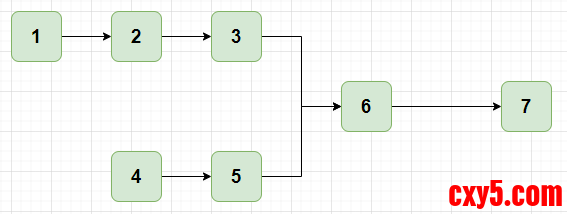
譬如现在有⼀个链表 1->2->3->6->7 ,另外⼀个链表 4->5->6->7 ,明显可以看出第⼀个公共节点是6 。
最直接的⽅法,每⼀个链表都遍历⼀次,计算链表中的个数,⽐如 1->2->3->6->7 个数为5, 4->5->6->7 个数为4,两者相差1(设为k)个。
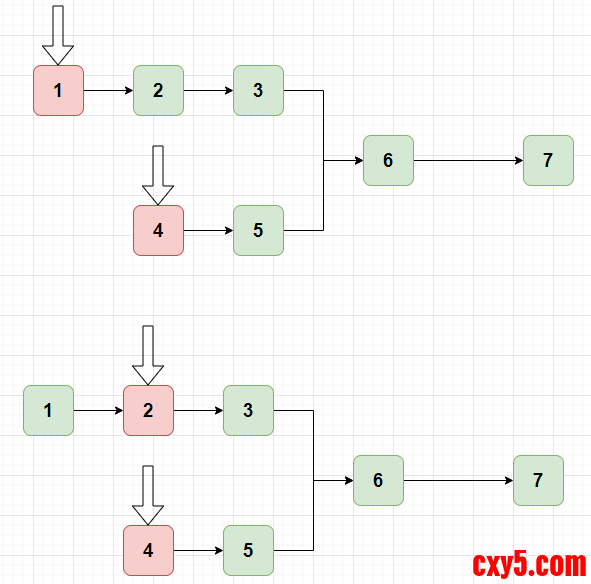
我们可以使⽤两个指针,分别指向链表的头部。然后让第⼀个链表的指针先⾛ k=1 步。
这样就相当于指针后⾯的两个链表等⻓了。
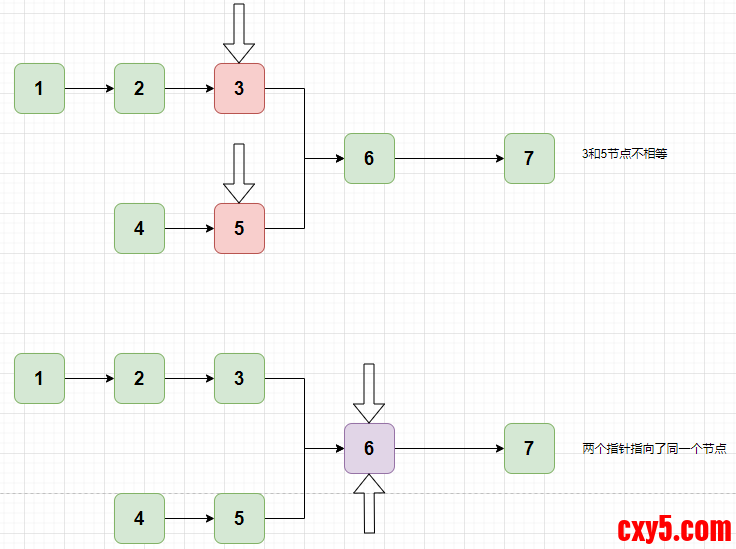
就可以开始⽐较,如果不相等,则两个指针都往后移动即可,知道节点为null。
- /*
- public class ListNode {
- int val;
- ListNode next = null;
- ListNode(int val) {
- this.val = val;
- }
- }*/
- public class Solution {
- public ListNode FindFirstCommonNode(ListNode pHead1, ListNode pHead2) {
- // 只要有⼀个为空,就不存在共同节点
- if (pHead1 == null || pHead2 == null) {
- return null;
- }
- // 计算链表1中的节点个数
- int numOfListNode1 = 0;
- ListNode head1 = pHead1;
- while (head1 != null) {
- numOfListNode1++;
- head1 = head1.next;
- }
-
- // 计算链表2中节点个数
- int numOfListNode2 = 0;
- ListNode head2 = pHead2;
- while (head2 != null) {
- numOfListNode2++;
- head2 = head2.next;
- }
-
- // ⽐较两个链表的⻓度
- int step = numOfListNode1 - numOfListNode2;
- if (step > 0) {
- // 链表1更⻓,链表1移动
- while (step != 0) {
- pHead1 = pHead1.next;
- step--;
- }
- } else {
- // 链表2更⻓,链表2移动
- while (step != 0) {
- pHead2 = pHead2.next;
- step++;
- }
- }
-
- // 循环遍历后⾯的节点,相等则返回
- while (pHead1 != null && pHead2 != null) {
- if (pHead1 == pHead2) {
- return pHead1;
- } else {
- pHead1 = pHead1.next;
- pHead2 = pHead2.next;
- }
- }
- return null;
- }
- }
- 时间复杂度:O(m+n),需要遍历链表三次(两次计算长度,一次查找)
- 空间复杂度:O(1),只使用常数级别额外空间
但是上⾯的做法,如果公共节点在最后⼀个,假设⼀个链表⻓度为 n ,⼀个为 m ,那么计算个数就要全部遍历,需要 n+m 。两个链表都移动,到最后⼀个节点的时候才相等,也是 n+m ,也就是 O(2*(n+m)) 。
双指针遍历法(最优)
有没有更加好⽤的做法呢?肯定有,我们来看:
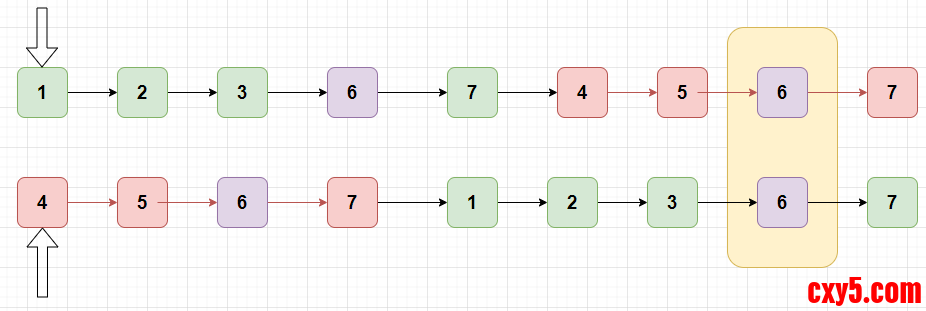
两个链表分别是:
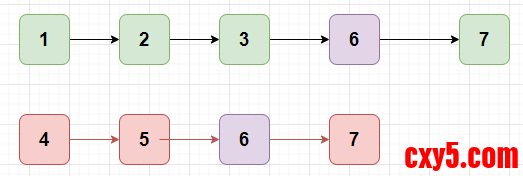
如果我在第⼀个链表后⾯拼接上第⼆个链表,第⼆个链表后⾯拼接上第⼀个链表,就会变成下⾯的样⼦:
发现了⼀个规律,也就是拼接之后的链表,是等⻓度的,第⼀个和第⼆个链表都从第⼀个开始⽐较,只要相等,就说明是第⼀个公共节点。也就是上⾯被圈起来的 6 节点。
原理如下:
- 设链表1独有部分长度为a,链表2独有部分长度为b,公共部分长度为c
- 指针p1路径:a + c + b
- 指针p2路径:b + c + a
- 两个指针路径长度相同,会在公共节点相遇
特殊情况处理:当两个链表没有公共节点时,两个指针会同时变为null,退出循环- public class Solution {
- public ListNode FindFirstCommonNode(ListNode pHead1, ListNode pHead2) {
- // 只要有⼀个为空,就不存在共同节点
- if (pHead1 == null || pHead2 == null) {
- return null;
- }
-
- ListNode head1 = pHead1;
- ListNode head2 = pHead2;
- while (head1 !=head2) {
- // 如果下⼀个节点为空,则切换到另⼀个链表的头节点,否则下⼀个节点
- head1 = (head1 == null) ? pHead2 : head1.next;
- head2 = (head2 == null) ? pHead1 : head2.next;
- }
- return head1;
- }
- }
- 时间复杂度:O(m+n),每个指针遍历两个链表各一次
- 空间复杂度:O(1),只使用两个指针
来源:程序园用户自行投稿发布,如果侵权,请联系站长删除
免责声明:如果侵犯了您的权益,请联系站长,我们会及时删除侵权内容,谢谢合作! |


 提升卡
提升卡 置顶卡
置顶卡 沉默卡
沉默卡 喧嚣卡
喧嚣卡 变色卡
变色卡 千斤顶
千斤顶 照妖镜
照妖镜