C中单向链表之增删改查
- // 链表(Linked List)是一种基础但至关重要的数据结构。它通过动态内存分配实现数据的非连续存储,解决了数组的固定长度和插入/删除低效的问题。无论是算法面试还是实际开发,链表都是高频考点和核心技能之一。
- #include <iostream>
- #include <stdlib.h>
- #include <stdio.h>
- #include <cstring>
- using namespace std;
- // 单向链表(Singly Linked List)
- typedef struct Node
- {
- int num;
- char data[20];
- struct Node *next;
- Node(int x) : num(num), next(nullptr) {}
- Node() {}
- } STU, Node, *PNode;
- // 链表创建(头插法)
- PNode linked_create_head1()
- {
- int num, i = 0;
- cout << "请输入节点数量:" << endl;
- cin >> num;
- PNode head = NULL;
- PNode current = NULL;
- while (i < num)
- {
- PNode temp;
- PNode node = (PNode)malloc(sizeof(Node));
- if (node == NULL)
- {
- printf("内存分配失败!\n");
- exit(1);
- }
- memset(node, 0, sizeof(Node));
- cout << "请输入第" << i << "节点data:" << endl;
- cin >> node->data;
- // 如果当前头节点为空,则将新节点作为头节点
- if (head == NULL)
- {
- head = node;
- }
- else
- {
- node->next = head; // 将新节点的指针域指向head(老节点)
- head = node; // 将新节点作为头节点
- }
- i++;
- }
- // 给节点编号
- current = head;
- for (int i = 0; i < num; i++)
- {
- current->num = i;
- current = current->next;
- }
- return head;
- }
- // 链表创建(尾插法)
- PNode linked_create_tail()
- {
- int num;
- cout << "请输入节点数量:" << endl;
- cin >> num;
- PNode head = nullptr;
- PNode tail = nullptr; // 记录尾节点
- for (int i = 0; i < num; i++)
- {
- // 创建新节点
- PNode node = (PNode)malloc(sizeof(Node));
- if (node == NULL)
- {
- printf("内存分配失败!\n");
- exit(1);
- }
- memset(node, 0, sizeof(Node));
- cout << "请输入第" << i + 1 << "个节点data:" << endl;
- cin >> node->data;
- node->num = i; // 直接设置节点编号
- // 如果是第一个节点
- if (head == nullptr)
- {
- head = node;
- tail = node;
- node->next = nullptr;
- }
- else
- {
- // 将新节点连接到链表尾部
- tail->next = node;
- tail = node; // 更新尾节点
- node->next = nullptr;
- }
- }
- return head;
- }
- // 释放链表
- void free_list(PNode head)
- {
- // 内存释放函数
- // 当前节点指针
- if (head == NULL)
- {
- cout << "链表为空" << endl;
- return;
- }
- while (head != NULL)
- { // 遍历链表
- PNode temp = head; // 临时保存当前节点
- head = head->next; // 移动到下一个节点
- free(temp); // 释放原节点内存
- }
- }
- void print_list(PNode *head)
- {
- // 检查链表是否为空
- if (*head == NULL)
- {
- printf("链表为空\n");
- return;
- }
- PNode current = *head; // 使用临时变量避免修改传入的 head 指针
- // 遍历整个链表,包括最后一个节点
- while (current) // 修改为 head 而不是 head->next
- {
- printf("当前节点为:%d,节点数据为%s\n", current->num, current->data);
- current = current->next;
- }
- }
- /*
- task : 1.从指定位置插入节点
- 2.创建一个有序链表,根据value值排序
- */
- void update_data(PNode head, int value)
- {
- PNode temp = head;
- while (temp)
- {
- if (value == temp->num)
- {
- // 找到指定节点
- // 先清空原始数据
- memset(temp->data, 0, sizeof(temp->data));
- cout << "请输入要更改的节点数据:" << endl;
- cin >> temp->data;
- cout << "节点数据更新成功" << endl;
- printf("更改后的数据为%s\n", temp->data);
- return;
- }
- temp = temp->next;
- }
- }
- void insert_node(PNode head)
- {
- PNode temp = head;
- PNode new_node = (PNode)malloc(sizeof(Node));
- if (new_node == NULL)
- {
- printf("内存分配失败!\n");
- exit(1);
- }
- memset(new_node, 0, sizeof(Node));
- cout << "请输入插入节点的序号" << endl;
- cin >> new_node->num;
- cout << "请输入插入节点的数据" << endl;
- cin >> new_node->data;
- while (temp)
- {
- if (temp->num >= new_node->num)
- {
- if (temp->num == new_node->num)
- {
- new_node->next = temp; // 调整后续链表
- }
- temp->num = temp->num + 1; // 节点序号递增
- }
- temp = temp->next;
- }
- //设置前一位node的next为new_node
- temp = head;
- while (temp)
- {
- if ((temp->num) + 1 == new_node->num)
- {
- temp->next = new_node;
- break; // 遍历链表找到插入的位置
- }
- }
- }
- int main()
- {
- PNode head;
- head = linked_create_head1();
- print_list(&head);
- insert_node(head);
- print_list(&head);
- update_data(head, 1);
- print_list(&head);
- free_list(head);
- return 0;
- }
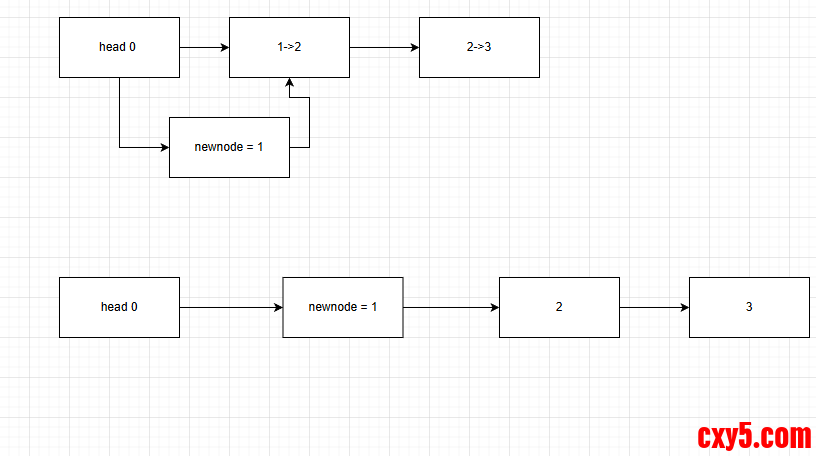
我们这里要想插入一个节点就得先找到它的序号前一位和后一位,所以我们将前一位node的next指向new_node,将new_node的next指向后一位node,将后几位node的序号各加一
本篇用于记录学习,如有问题欢迎指出
来源:程序园用户自行投稿发布,如果侵权,请联系站长删除
免责声明:如果侵犯了您的权益,请联系站长,我们会及时删除侵权内容,谢谢合作! |


 提升卡
提升卡 置顶卡
置顶卡 沉默卡
沉默卡 喧嚣卡
喧嚣卡 变色卡
变色卡 千斤顶
千斤顶 照妖镜
照妖镜